MACHIAVELLI (1469-1527)
“The Renaissance produced one man of supreme eminence in political philosophy – Niccolo Machiavelli.” Bertrand Russell.
Machiavelli was born in Florence, Italy. Florence had risen rapidly from the 1300s to near 1500, thanks in large part to the strength of the Medici family whose revolution in accounting made them bankers to Europe, brought wealth to Florence, and financed the great renaissance art and architecture in the city-state.
Lorenzo de Medici, known as Lorenzo the Magnificent, was the de facto ruler of Florence during its golden age. Lorenzo died in 1492.
French King, Charles VII, invaded Italy and overthrew the Medicis in 1494. Lorenzo’ son, Piero de Medici, called Piero the Unfortunate, was unable to defend Florence and surrendered the republic to Charles, caving in to every demand and not even attempting to negotiate better terms. In response, the populace rose up and looted the Medici home. In December, 1494, Piero and his family fled Florence.
During this time, Girolamo Savonarola came to dominance in Florence. While Lorenzo was alive, Savonarola was made the spiritual counsel of the Medici family. Savonarola spent his early years as an itinerant priest making fiery and contentious sermons calling for reform and repentance, with an apocalyptic theme. In Florence, his sermons against what he saw as tyranny and corruption grew increasingly strident, and he peppered them with prophesies about apocalyptic disasters.
When the French invasion took place, many of Savonarola’s followers believed it was proof of his prophesy. With the Medici family gone, Florentines turned to the fanatical friar to help them negotiate with the French, and then establish a new government. He did so with gusto.
As a cleric, Savonarola could not hold office. However, he formed a political party from his followers, the Frateschi, and together they set about to remake Florence in Savonarola’s pious, Christian, and somewhat egalitarian model. The people followed his “puritanical” lifestyle eagerly at first. However, the peak of his civic madness came in February, 1497, when he organised the Bonfire of the Vanities, where he built a large bonfire in the main square and exhorted Florentines to cast into it any “objects that are deemed to be occasions of sin.”
Later, Pope Alexander VI felt he had had enough when Florence refused to join the Pope’s Holy League alliance to drive out the French and Savonarola continued to give sermons despite being banned. So the Pope used his last weapon: excommunication, in May, 1497.
The government of Florence, under increasing political, economic, and religious pressure, tried to convince Savonarola to shut up. Many followers left his side, others faltered as pressures mounted and the city’s economic status wilted. Savonarola’s desperate attempts to regain his lost authority failed and Florentines turned against him. When arrested and questioned, Savonarola confessed to “having invented his prophecies and visions.” In 1498, the angry Florentines hung Savonarola in the public square and his body was burned to ashes.
Machiavelli was in his twenties when he witnessed these political developments in Florence. The rise and fall of Savonarola hugely influenced his political thinking. Savonarola’s miserable end led Machiavelli remark: “all armed prophets have conquered and unarmed ones failed.” Savonarola appears as the “unarmed prophet” who failed because he lacked the force necessary to secure his authority.
After Savonarola had been executed, Machiavelli, at age 29, was elected to secretary of the Second Chancery. However, Medicis came back to power in 1512 and Machiavelli was removed from office. Machiavelli wrote The Prince in 1513 probably in the hope to win the favour of the Medici.
Apart from The Prince, Machiavelli also wrote another major work, The Discourses.
What we will discuss in Machiavelli include:
- The Impact of Renaissance on Machiavelli
- Machiavelli on Human Nature
- Machiavelli’s Moral Indifference
- Machiavelli’s Idea of the Omnipotent Legislator
- Machiavelli’s Views on Religion
- Machiavelli’s Views on Fortune
- Machiavelli on the Qualities of a Ruler
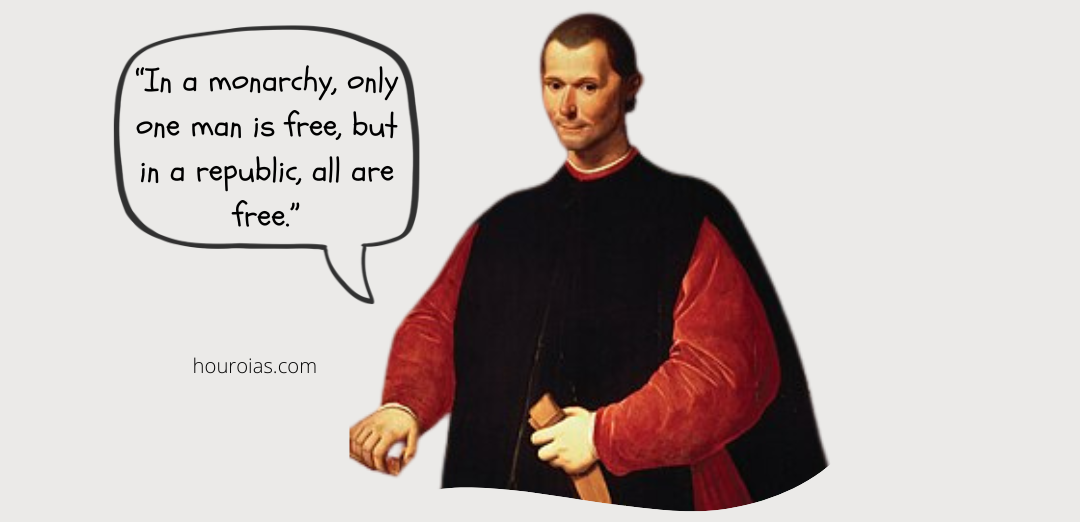
- Machiavelli’s Republicanism Explained
- Machiavelli’s Political Philosophy: An Assessment
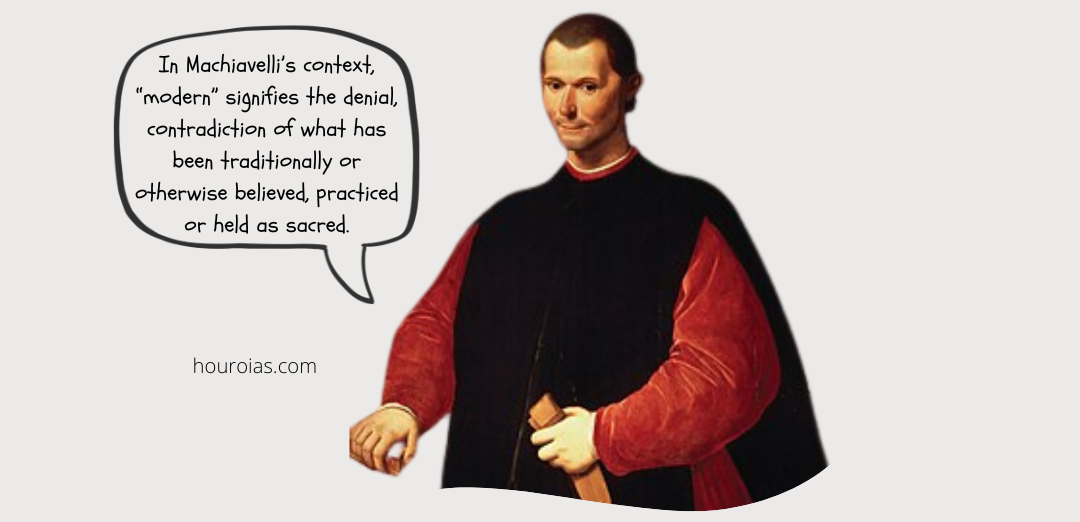
- What is Modern in Machiavelli?
References
- Machiavelli and Savonarola [https://ianchadwick.com/machiavelli/machiavelli-and-savonarola/]
- Machiavelli and Savonarola [https://scotterb.wordpress.com/2011/05/21/machiavelli-and-savonarola/]